Compare · Serums
Azelaic Acid Hyaluron Redness Soothing Serum vs DIVE-IN Low Molecular Hyaluronic Acid Serum: which is better?
One serum leans into redness and breakout care, while the other centers on quick hydration and a lighter finish.
The quick answer
Depends what you need
- Rated higher: DIVE-IN Low Molecular Hyaluronic Acid Serum — 88 vs 81 nextscore
- Better for redness/irritation: Azelaic Acid Hyaluron Redness Soothing Serum
Anua Azelaic Acid Hyaluron Redness Soothing Serum is better for redness and breakouts, while Torriden DIVE-IN Low Molecular Hyaluronic Acid Serum is better for fast, lightweight hydration.
Choose Azelaic Acid Hyaluron Redness Soothing Serum if
- redness or breakout care matters most
- you want a gentler azelaic option
Choose DIVE-IN Low Molecular Hyaluronic Acid Serum if
- fast hydration matters most
- you dislike sticky finishes
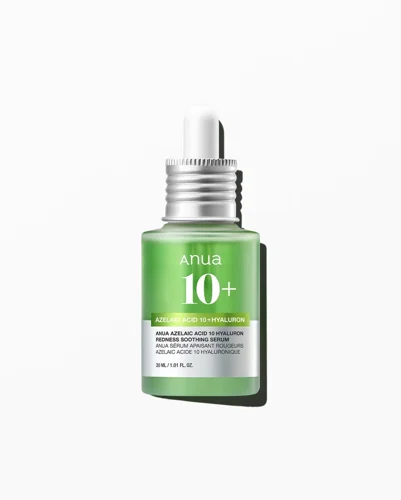
Anua
Azelaic Acid Hyaluron Redness Soothing Serum
See alternatives$0.52/ml · 29.9 ml
Torriden
DIVE-IN Low Molecular Hyaluronic Acid Serum
See alternatives$0.42/ml · 50 ml
At a glance
| Azelaic Acid Hyaluron Redness Soothing Serum | DIVE-IN Low Molecular Hyaluronic Acid Serum |
|---|---|
| $0.52/ml | $0.42/ml |
| 81 · 366 verdicts | 88 · 157 verdicts |
| Redness/Irritation | — |
| Azelaic Acid, Hyaluronic Acid both | Hyaluronic Acid both |
What Reddit says
Azelaic Acid Hyaluron Redness Soothing Serum
What Reddit likes
- 10% azelaic acid for redness and breakouts
- Lightweight, watery texture that layers easily
- Often gentler than stronger azelaic acid options
Watch out for
- Can sting or burn on a compromised barrier
- Some people get dryness or peeling
- Results can be slow or underwhelming
DIVE-IN Low Molecular Hyaluronic Acid Serum
What Reddit likes
- Absorbs fast, no sticky finish
- Good on damp skin for dehydration
- Fragrance-free and alcohol-free
Watch out for
- Witch hazel trips up sensitive skin
- Can sting and trigger red bumps
- Often feels like not enough moisture
Compare full ingredient lists · 14 in common
In both · 14
- Water
- Dipropylene Glycol
- 1,2-Hexanediol
- Panthenol
- Glycerin
- Ethylhexylglycerin
- Allantoin
- Sodium Hyaluronate
- Beta-Glucan
- Madecassoside
- Madecassic Acid
- Butylene Glycol
- Pentylene Glycol
- Ceramide NP
Only in Azelaic Acid Hyaluron Redness Soothing Serum · 21
- Azelaic Acid
- Propylene Glycol
- Sodium Hydroxide
- Hydroxyethylcellulose
- Betaine Salicylate
- Biosaccharide Gum-1
- Dipotassium Glycyrrhizate
- Melia Azadirachta Leaf Extract
- Camellia Sinensis Leaf Water
- Melia Azadirachta Flower Extract
- Niacinamide
- Aloe Barbadensis Leaf Juice
- Centella Asiatica Extract
- Centella Asiatica Leaf Extract
- Centella Asiatica Root Extract
- Asiaticoside
- Asiatic Acid
- Squalane
- Zinc PCA
- Caprylyl/Capryl Glucoside
- Hydrogenated Lecithin
Only in DIVE-IN Low Molecular Hyaluronic Acid Serum · 19
- Hydrolyzed Hyaluronic Acid
- Sodium Acetylated Hyaluronate
- Sodium Hyaluronate Crosspolymer
- Hydrolyzed Sodium Hyaluronate
- Trehalose
- Betaine
- Propanediol
- Portulaca Oleracea Extract
- Hamamelis Virginiana (Witch Hazel) Leaf Extract
- Malachite Extract
- Cholesterol
- Glyceryl Acrylate/Acrylic Acid Copolymer
- PVM/MA Copolymer
- Polyglyceryl-10 Laurate
- Xanthan Gum
- Tromethamine
- Carbomer
- Scutellaria Baicalensis Root Extract
- Paeonia Suffruticosa Root Extract